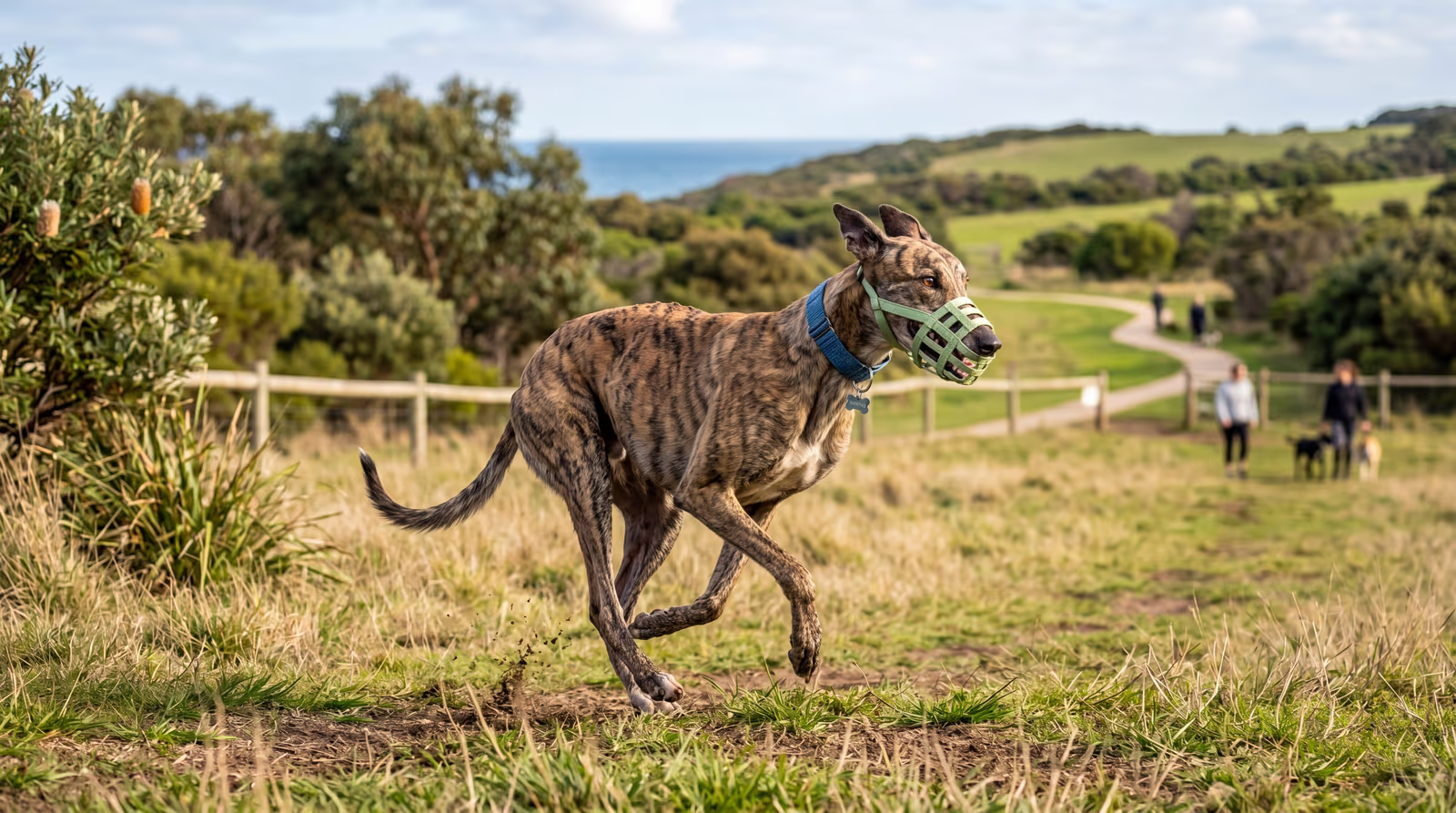
Off-Leash for Greyhounds in the USA (2026): Rules, Recall and Safety
A guide to off-leash life for greyhounds in the US, muzzles and leash laws, whether greyhounds can go to dog parks, managing prey drive and recall, and safer options.
Greyhounds make wonderfully gentle, affectionate pets — famously content to spend most of the day asleep on the couch — but their unique nature means off-leash life takes a bit more thought than it does for the average dog. As sighthounds built for speed with a strong prey drive, greyhounds bring particular considerations around muzzles, recall, and park safety. The encouraging news is that with the right knowledge and a sensible approach, your greyhound can absolutely enjoy off-leash freedom and exercise. This guide covers the muzzle question, leash laws, whether dog parks are suitable, and how to keep everyone safe. (Pair it with our dog park etiquette guide for the general ground rules.)
Looking for a securely fenced spot? Browse the directory and filter for fenced parks, or open the live map.
Muzzles and leash laws
Unlike some countries, the US has no blanket muzzle law for greyhounds. The thousands of retired racers rehomed each year through adoption groups like Greyhound Pets of America and local rescues are adopted as ordinary family pets, and they’re generally not required to wear a muzzle in public. A muzzle requirement would only apply in narrow cases — if a specific dog has been legally declared “dangerous,” or under a particular local ordinance — not to greyhounds as a breed.
What does apply to your greyhound is the same leash law as any other dog: on-leash in public unless you’re in a designated off-leash area, and under control at all times (see our guide to dog park rules by state). And although it isn’t required, plenty of thoughtful owners choose to keep a basket muzzle handy at busy parks anyway, simply as a sensible safety measure around small dogs and unfamiliar situations — a greyhound in a well-fitted basket muzzle can still run, drink, and pant comfortably.
Understanding the greyhound’s nature
To make good decisions about off-leash time, it helps to understand what makes greyhounds tick. They are sighthounds, bred over centuries to spot, chase, and catch fast-moving prey at extraordinary speed. This has two big implications. First, they have a prey drive that can be triggered by small, fast-moving animals — which, at a dog park, can include small dogs, especially ones that run and squeal. Second, they were not bred for the kind of biddable, handler-focused recall you see in a working breed; when a greyhound locks onto something and gives chase, they can hit 40+ mph in a few strides and may simply not hear you.
None of this makes greyhounds bad or dangerous dogs — the vast majority are sweet-natured and gentle. But it does mean that “just let them off to play with everyone” is not the right default, and that a thoughtful, individual approach is essential.
Are dog parks suitable for greyhounds?
The honest answer is: sometimes, with care. A busy off-leash park full of small, darting dogs is one of the riskier environments for a greyhound with any prey drive — both for the small dogs and for the greyhound, who could be injured in a high-speed chase or scuffle. So rather than diving into the deep end, most experienced greyhound owners take a more controlled approach.
Excellent options include visiting a fully fenced park solo or at very quiet times, so your greyhound can have a glorious safe sprint without other dogs to trigger a chase. Greyhound-specific meetups and “greyhound playgroups,” common in most US cities through adoption groups, let greyhounds run and socialize with their own kind, who tend to play in a compatible racing-and-chasing style. And parks frequented by other large, calm dogs are generally safer than ones full of small breeds. If you do use a general park, choosing quiet times, keeping a muzzle on if there’s any doubt, and staying close to manage interactions all help enormously.
Recall and off-leash training
Can you ever let a greyhound off-leash in an open space? For some greyhounds, with dedicated training, yes — but many never become reliably off-leash in unfenced areas, and that’s okay. Their speed means a single failed recall can carry them a long way into danger before you can react. So the safest place to give a greyhound true off-leash freedom is a securely fenced park or yard, where a missed recall has no serious consequences.
If you do want to build recall, work patiently in fenced spaces first, use high-value rewards, and practice constantly when there are no triggers around before you ever test it with distractions. A long line gives you a safety net during training in larger areas. But always be realistic: respecting your individual dog’s prey drive, rather than assuming you can train it away, is the responsible approach. A fenced sprint and plenty of on-leash walks make for a very happy greyhound without the risk.
Greyhounds and small dogs
The question of small dogs deserves its own mention, because it’s where things most often go wrong. Some greyhounds are utterly trustworthy with small dogs and cats; others have a prey drive that a small, fast-moving dog can trigger in an instant. It comes down entirely to the individual dog and to careful, controlled introductions. At a park, the safe rule is never to assume — keep your greyhound well away from small dogs unless you genuinely know your dog is safe with them, and keep that muzzle on if there’s any uncertainty. Equally, if you have a small dog, give an unfamiliar greyhound a respectful amount of space. A little caution protects everyone.
Frequently asked questions
Do greyhounds have to be muzzled in public in the US?
Generally no. There’s no nationwide muzzle law for greyhounds, and retired racers adopted as pets are typically not required to wear one. A muzzle may apply only if a specific dog is legally declared dangerous, or under a local ordinance. Many owners still keep a basket muzzle handy at busy parks as a sensible safety measure around small dogs. Standard leash laws still apply.
Can greyhounds go to off-leash dog parks?
They can, but with real caution. Greyhounds are sighthounds with a strong prey drive and aren’t bred for reliable recall, so a busy off-leash park with small, fast-moving dogs can be risky. Many greyhound owners prefer fenced parks visited solo, greyhound-only meetups, or parks with other large, calm dogs.
Can you let a greyhound off-leash?
Only once you’ve done careful recall training and you’re confident in a securely fenced space — and even then, many greyhounds never become reliable off-leash in open areas because of their prey drive and speed. A fully fenced park or yard is the safest place to give a greyhound a proper run.
Are greyhounds good with small dogs?
Some greyhounds live happily with small dogs, but others have a high prey drive that a small, fast-moving animal can trigger. It depends entirely on the individual dog and proper introductions. At a park, never assume — keep your greyhound away from small dogs unless you’re certain, and use a muzzle if there’s any doubt.
Happy, safe off-leash time for your greyhound
Greyhounds can enjoy a wonderful off-leash life — it just looks a little different from other breeds. Know that there’s no breed muzzle law in the US but standard leash laws apply, respect your dog’s prey drive rather than wishing it away, favor securely fenced spaces and greyhound-friendly company, and keep small dogs in mind. Do that, and your gentle couch potato can have the safe, joyful sprints they were built for, while everyone at the park stays safe.
Find a fully fenced park near you on Dog Park Finder USA →, perfect for a safe greyhound run, or open the live map. Our fully fenced dog parks guide has more secure options.
Compare nearby dog parks before you leave
Open the directory to check fenced status, reviews, photos, map distance, and local park details across the USA.
Keep reading
The Best Dog Parks for Small Dogs (2026): A Safe Owner's Guide
How to choose the best dog parks for small dogs — what to look for, small-dog areas, staying safe around bigger dogs, the best times to visit, and tips for nervous little dogs.
Dog Park Mental Health: Benefits for Dogs and Owners (2026)
How dog parks benefit mental health — for dogs through enrichment and socialization, and for owners through exercise, social connection, routine, and the human-dog bond.
Dog Parks in Winter (2026): Keeping Your Dog Active in the Cold
A guide to dog parks in winter, why to keep visiting, cold-weather safety for paws and coats, handling mud and short days, what to bring, and warm indoor alternatives.